

The Quiet Rooms
Meetings that used to spark now just... end. Nobody pushes back. Nobody says what they're actually thinking. That's not alignment — it's avoidance.
FOR TEAMS SCALING PAST 50 PEOPLE
Workshops that fix the root cause: trust gaps, decision bottlenecks, silo wars. All in one day. No trust falls. No fluff. Just frameworks that make 1+1=3


Meetings that used to spark now just... end. Nobody pushes back. Nobody says what they're actually thinking. That's not alignment — it's avoidance.
One team says the other over-commits. The other says expectations were never clear. Meanwhile your customer gets caught in the middle — and your best people are losing patience.
Your manager Slacks you before deciding anything. You hired them to lead, but somehow you've become the bottleneck you swore you'd never be.
Your last three regrettable departures had one thing in common: "I love the mission, but..." That "but" is costing you.

Two minutes inside a real retreat: the room, the work, and what teams sound like on the other side of it.
Most team building treats symptoms. We diagnose root causes. Every team is stuck somewhere on our hierarchy of needs — maybe it's a trust problem, maybe it's decision-rights, maybe nobody knows where you're going.
We figure out exactly where you're stuck. Then we fix that — not whatever's trendy.
"Most 'team building' is a band-aid on a broken leg. We're the X-ray that shows you where the fracture actually is."

Teams where feedback has gone silent and mistakes get buried.
Your team is polite. Too polite. They won't admit when they're stuck or ask for help. Problems fester until they explode.
We use "Vulnerability Loops" and "Personal Histories" to lower the masks. This isn't therapy—it's Google's Project Aristotle.
Diverse teams where people still feel like outsiders.
You've hired a diverse team, but people are code-switching and holding back. That's not inclusion—it's tolerance.
We use "Belonging Cues" to move beyond compliance to connection. Make diverse perspectives actually welcome.
Teams that keep misreading each other's tone and intent.
Your direct communicator thinks your planner is "slow." Your builder thinks your driver is "cold." Nobody's wrong—just different languages.
We map your team's "Operating System" using DISC. Teach the Platinum Rule: treat others how they want to be treated.
Teams that either fight too much (drama) or not enough (apathy).
Either every meeting is a battlefield, or nobody says anything real and decisions die in the hallway. Both kill momentum.
We teach the "Conflict Continuum"—distinguishing productive Task Conflict from toxic Relationship Conflict.
Teams where everything bottlenecks at the top.
Your calendar is full of decisions others should make. Managers Slack you before choosing a font color. It's learned helplessness.
We install decision rights using RAPID. Everyone knows what they own and what they consult on. You get your calendar back.
Fast-growing teams losing their DNA.
At 20 people, everyone knew the mission. At 80, you have three different answers. Your "values" are just words on a wall.
We craft a Team Canvas that defines who you are, where you're going, and the non-negotiable behaviors you'll hire and fire by.
Teams stuck in "keeping the lights on" mode.
You're so busy executing that nobody is inventing. New ideas die in committee. "We tried that once" is the company motto.
We install a "Lab Mindset" using Design Thinking. Learn to run low-cost experiments and fail forward fast.
Teams with an elephant in the room that's killing morale.
Warning: Requires executive sponsorship. If your CEO isn't ready to hear hard truths, we're not the right fit.
Everyone knows there's a problem. Nobody will say it out loud. It's rotting from the inside.
Team surgery. Using Lencioni's 5 Dysfunctions, we surface unspoken resentments, name the elephant, and clear the room.
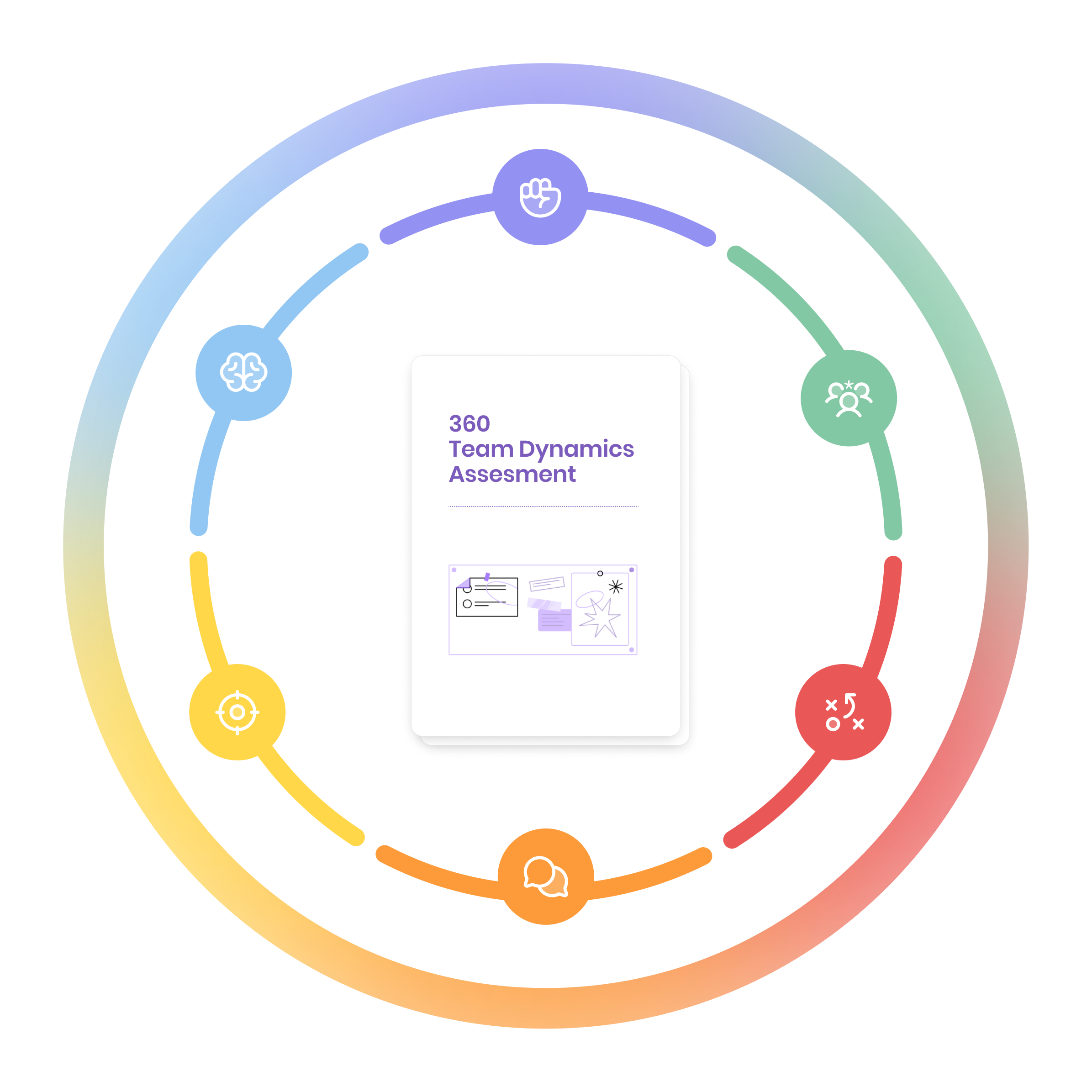
See where your team dynamics are strong—and where they're holding you back. The 360 Team Dynamics Assessment reveals what's driving (or draining) trust, alignment, and execution speed."
Book a 30-minute strategy session. We'll ask annoying questions, identify your Six Levels gap, and figure out if we're actually a fit. No pitch. Just diagnosis.
We build a custom agenda based on your specific friction points. Most clients combine 2–3 modules for a full-day or two-day offsite.
We facilitate the session—live, in-person or virtual. We handle the hard conversations so you don't have to be the bad guy. We push where you can't.
You get a debrief report, a toolkit of frameworks, and optional follow-up coaching. Because one good day doesn't change a culture—consistent practice does.
%20(Small).avif)

.avif)
Of participants say they understand their colleagues better after Day 1
Report using at least one framework 30 days later
Workshops delivered in the last 12 months
Yes—and most clients do. The most popular combo is Trust (morning) + Conflict or Empowerment (afternoon) for a packed full-day. We'll recommend the right mix based on your diagnosis.
Both. We've adapted everything for high-engagement virtual delivery (Miro + Zoom) without losing the intensity. That said, for high-stakes interventions (like the Dysfunction Reset), in-person hits different.
5-15 people per session. These workshops work best for intact teams (your exec team, your engineering org, your GTM leadership) rather than random cross-company cohorts.
Maybe the most important time. But tell us upfront—we'll adjust the approach. Post-layoff teams need the Dysfunction Reset or Trust workshop, not a Vision session.
Workshops start at $15,000 for a half-day. Custom multi-day offsites range higher depending on scope, travel, and follow-up. We'll quote after the diagnosis call—no surprises.
Good. So are we. That's why we don't do trust falls. We bring data, frameworks, and facilitation that even your most cynical engineer will respect. If they don't, we'll hear about it—and adjust in real-time.
Most "team building" is entertainment disguised as development. We're the opposite: development that happens to be engaging. We diagnose before we prescribe. We push where it's uncomfortable. And we measure what changes.
Work With Me

-23.avif)
We turn talented individuals into teams that make 1+1=3: aligned, fast, and hard to poach. Frameworks that stick, facilitation that pushes, proof it worked.
Scored on the Six Levels before we design anything. This is the diagnosis, not a survey.
Re-measured after the intervention. The same instrument, so the movement is defensible internally.





.avif)
.avif)



.webp)
You don't need a "fun day." You need a team that ships faster, fights better, and stops leaking your best people. Here's what that looks like once the system is in place:
People own calls instead of escalating them, and your calendar stops being everyone's bottleneck.
Teams argue about the work, not each other, and leave aligned instead of resentful.
The "I love the mission, but…" conversations stop. Engagement scores climb and you can prove it.
One answer to "where are we going?", not three, depending on who you ask.
That's not a personality fix. It's a system. And it's teachable in a day.
Real frameworks, real conversations, and a facilitator who pushes where you can't.
Growth doesn't break culture. Ignoring the cracks does.
Two lists. Find yourself in one of them.
Four symptoms, in the order they usually show up.
Meetings that used to spark now just… end. Nobody pushes back. Nobody says what they're actually thinking. That's not alignment. It's avoidance.
Engineering says Sales over-promises. Sales says Engineering under-delivers. Product is stuck in the middle. Meanwhile, your customer waits.
Your managers Slack their boss before deciding anything. You promoted them to lead, but every call still rolls uphill, and the people you can least afford to lose are the ones waiting on answers.
Your last three regrettable departures had one thing in common: "I love the mission, but…" That "but" is costing you, and every exit interview points back at a manager, not the mission.
What one stuck team costs you in a year.
Most team building treats symptoms. We diagnose root causes. Every team is stuck somewhere on our hierarchy of needs. Maybe it's a trust problem, maybe it's decision rights, maybe nobody knows where you're going. We figure out exactly where you're stuck, then we fix that, not whatever's trendy.
Foundation at the base. Every workshop maps to a level, and nothing above Level 1 holds if Level 1 is missing.
-37.jpg)
Most "team building" is a band-aid on a broken leg. We're the X-ray that shows you where the fracture actually is.
Fahd Alhattab · Founder, Unicorn LabsEvery workshop maps to a level on the Six Levels. Start where you're stuck, or stack two or three into a full-day or multi-day offsite. Most clients combine modules.
For teams where feedback has gone silent and mistakes get buried.
Your team is polite. Too polite. They won't admit when they're stuck or ask for help, so problems fester until they explode.
We use Vulnerability Loops and Personal Histories to lower the masks. This isn't therapy. It's Google's Project Aristotle, applied.
For diverse teams where people still feel like outsiders.
You've hired a diverse team, but people are code-switching and holding back. That's not inclusion. It's tolerance.
We use Belonging Cues to move past compliance to connection, so different perspectives actually get heard.
For teams with an elephant in the room that's killing morale.
Everyone knows there's a problem. Nobody will say it out loud. It's rotting the team from the inside, and the longer it sits, the more your good people start eyeing the door.
Team surgery. Using Lencioni's 5 Dysfunctions, we surface the unspoken resentments, name the elephant, and clear the room so the team can actually move again.
For teams where everything bottlenecks at the top.
Calendars are full of decisions other people should be making. Managers check in before choosing a font color. It's learned helplessness, and it's expensive.
We install decision rights using RAPID. Everyone knows what they own and what they only weigh in on. Leaders get their calendars back.
For leaders unsure they've got the right people in the right roles.
Some seats are empty, some are wrong, and nobody wants to say it.
We map roles to strengths and gaps, pressure-test fit, and build a clear picture of who to hire, develop, move, or coach out.
For teams that either fight too much (drama) or not enough (apathy).
Either every meeting is a battlefield, or nobody says anything real and decisions die in the hallway. Both kill momentum.
We teach the Conflict Continuum, separating productive Task Conflict from toxic Relationship Conflict, so the team can disagree hard and still ship.
For managers and peers who avoid the conversations that matter most.
Hard feedback gets dodged or sugar-coated until it's a full-blown performance problem. People rehearse the talk for weeks and still botch it.
We drill real scenarios with the SBI model and a feedback framework people can use that same afternoon. Up, down, and sideways.
For teams that keep misreading each other's tone and intent.
Your direct communicator thinks your planner is "slow." Your planner thinks your driver is "cold." Nobody's wrong. They're just speaking different languages.
We map your team's operating system with DISC and teach the Platinum Rule: treat people how THEY want to be treated. Pairs well with Communication or EQ.
For leaders whose great ideas keep dying in the room.
Smart people, weak pitches. Strategy gets explained in spreadsheets, nobody buys in, and influence defaults to whoever talks loudest.
We teach narrative structure and persuasion: how to frame, pitch, and sell an idea so it moves people and gets funded.
For manager groups who lead by instinct, not skill.
Your managers were promoted for being great individual contributors. Leading people? Nobody taught them that. Styles clash, coaching is non-existent, and your best ICs quietly decide management isn't for them.
We expose each leader's default style, teach situational leadership and a coaching model, and build a shared leadership language across the team.
For fast-growing teams losing their DNA.
At 20 people everyone knew how things were done. At 80, you get three different answers and the values on the wall are just decoration.
We build a Culture Canvas: purpose, values, behaviours, rituals, and the recognition cues you'll actually reinforce. Designed culture, not accidental culture.
For teams growing in different directions without realizing it.
Everyone's busy. On what, exactly? Goals, roles, and priorities don't line up, and "why are we doing this?" goes unanswered.
We run the Team Canvas to align on purpose, goals, roles, values, and each person's strengths and gaps. One team, pointed in one direction.
For teams stuck in "keeping the lights on" mode.
You're so busy executing that nobody is inventing. New ideas die in committee. "We tried that once" has quietly become the company motto.
We install a Lab Mindset: the Innovator's Dilemma, an Explore/Exploit portfolio, and small, cheap experiments the team can run without betting the quarter.
For leadership teams that need one shared answer to "where are we going?"
Ask five leaders where the company's headed and you get five answers. Strategy lives in the founder's head; everyone else executes on guesses.
We cascade the whole stack in one room: purpose, values, vision, strategy, goals, and OKRs. The team leaves aligned from the why down to this quarter's metrics.
Workshops start at $15,000 for a half-day. Multi-day offsites run higher. We quote after the diagnosis call.
Book a Strategy SessionSee where your team dynamics are strong and where they're holding you back. The 360 Team Dynamics Assessment reveals what's driving (or draining) trust, alignment, and execution speed.
Start Your Free AssessmentNo sales pitch, no spam. Just clarity on where you're actually stuck.
Most clients go from first call to workshop in 3–4 weeks. If your offsite date is locked, we can move faster.
Book a Strategy SessionBook a 30-minute strategy session. We ask annoying questions, identify your Six Levels gap, and figure out if we're a fit. No pitch, just diagnosis.
We build a custom agenda around your specific friction. Most clients combine 2–3 modules into a full-day or two-day offsite.
We facilitate live, in-person or virtual. We handle the hard conversations so you don't have to be the bad guy, and we push where you can't.
You get a debrief report, a toolkit of frameworks, and optional follow-up coaching. One good day doesn't change a culture. Consistent practice does.
Measured with the same instrument we start with, so the movement is yours to report internally.
.avif)
I was bracing for eye-rolls from Engineering. Instead, their lead said it was the most useful offsite he'd attended in 5 years. Engagement scores went up 14 points.
We came out with a decision-making framework we still use 18 months later. Our exec team stopped relitigating everything in Slack. I got 5 hours a week back.
100+ strategic workshops facilitated · 35,000+ leaders trained
Still stuck on something that isn't here? Ask us on the strategy call.
Yes, and most clients do. The most popular combo is Trust in the morning, then Conflict or Empowerment in the afternoon, for a packed full-day. We recommend the right mix based on your diagnosis.
Yes. Most teams start with one workshop, then sequence the next levels over a quarter or two. We'll map a path up the Six Levels so it's a development plan you can budget and report on, not a one-off.
We baseline with the 360 Team Dynamics Assessment, then re-measure after. You get a debrief report with movement on trust, alignment, and execution speed: the numbers you need to defend the spend internally.
Both. We've adapted everything for high-engagement virtual delivery (Miro + Zoom) without losing intensity. For high-stakes work like the Dysfunction Reset, in-person hits different.
5–15 people per session. These work best for intact teams (your exec team, your engineering org, your GTM leadership), not random cross-company cohorts.
Maybe the most important time. Tell us upfront and we'll adjust. Post-layoff teams need the Dysfunction Reset or Trust workshop, not a Vision session.
Workshops start at $15,000 for a half-day. Custom multi-day offsites range higher depending on scope, travel, and follow-up. We quote after the diagnosis call, with no surprises.
Good. So are we. That's why we don't do trust falls. We bring data, frameworks, and facilitation even your most cynical engineer will respect, and if they don't, we hear about it and adjust in real time.
Most "team building" is entertainment disguised as development. We're the opposite: development that happens to be engaging. We diagnose before we prescribe, push where it's uncomfortable, and measure what changes.
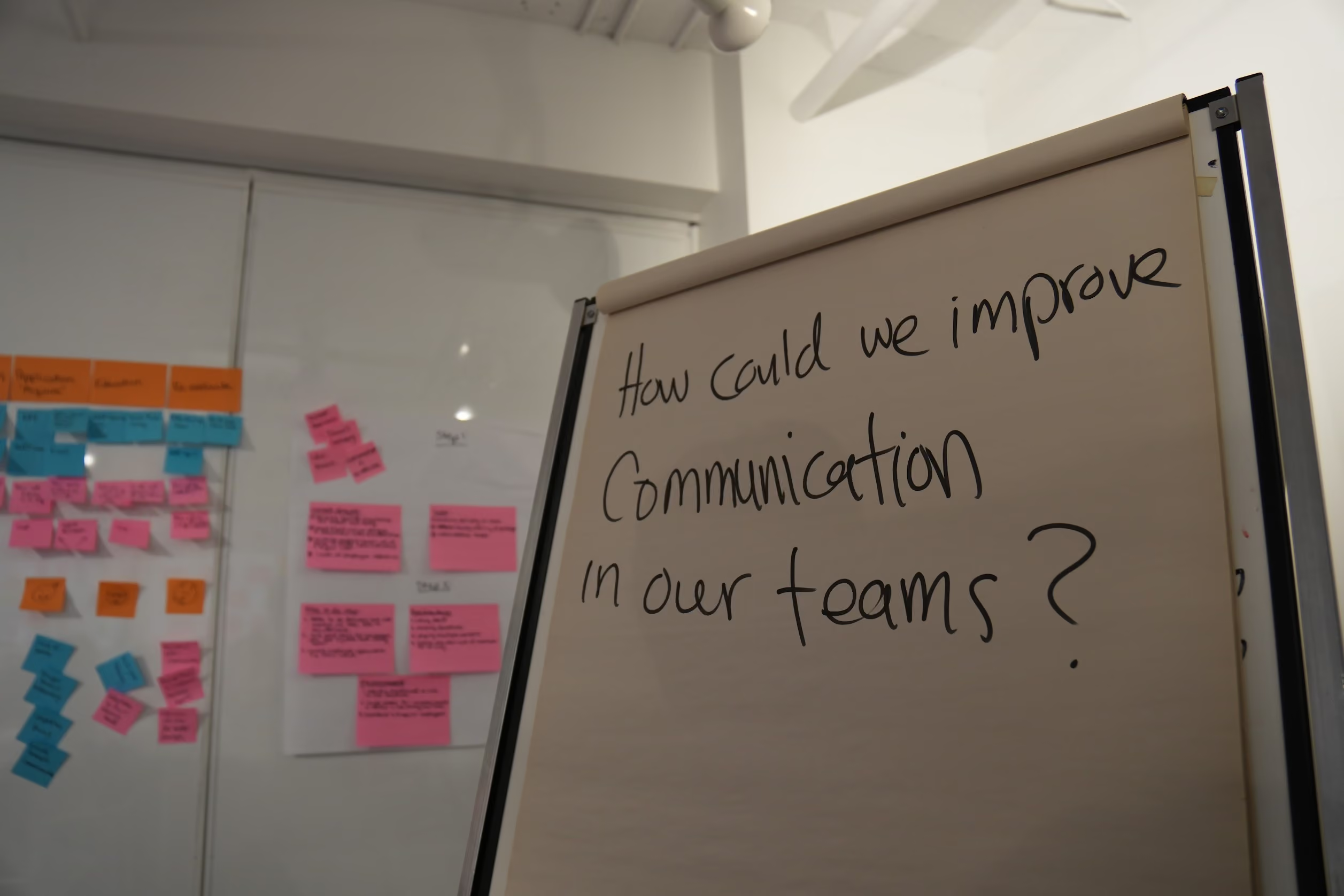
Book a 30-minute strategy session. We'll diagnose where your team is stuck and tell you exactly which workshop will move the needle, even if it's not ours.
No pitch, no spam. Just clarity.


